Bathroom Tub Ideas: 17 Beautiful Ways to Create a Relaxing and Stylish Bath
A bathtub can completely change the feeling of a bathroom. Whether you are remodeling a spacious primary bathroom or refreshing a smaller guest bath, the right tub can become a beautiful focal point while making the room more comfortable and relaxing. Today, homeowners have more choices than the traditional built-in tub, from sculptural freestanding designs to cozy alcove tubs and deep soaking styles.The best bathroom tub ideas are not simply about choosing the most attractive tub. The size of the room, available floor space, plumbing, lighting, storage, materials, and the way you use your bathroom all matter. A freestanding tub, for example, can create a dramatic centerpiece, while an alcove tub can make better use of limited space and provide a more integrated look.If you are planning a bathroom update, these ideas can help you create a space that feels beautiful, comfortable, and practical for everyday life.
1. Choose a Freestanding Tub as the Focal Point
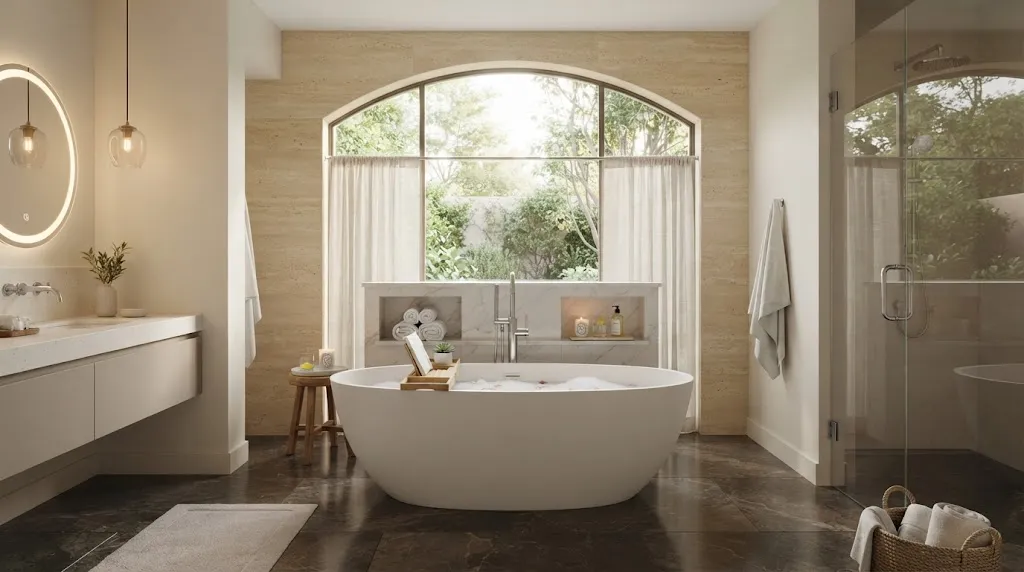
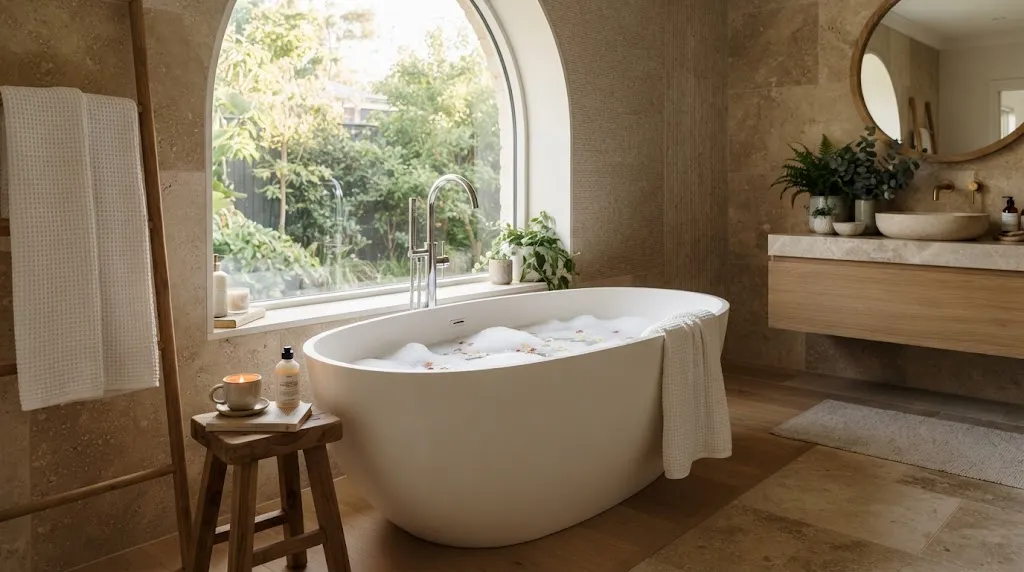
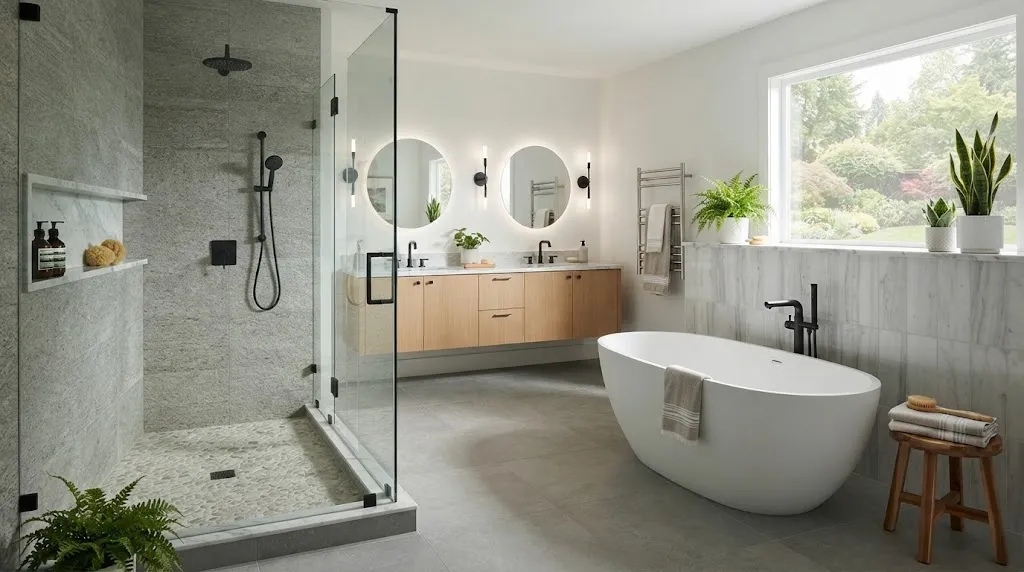
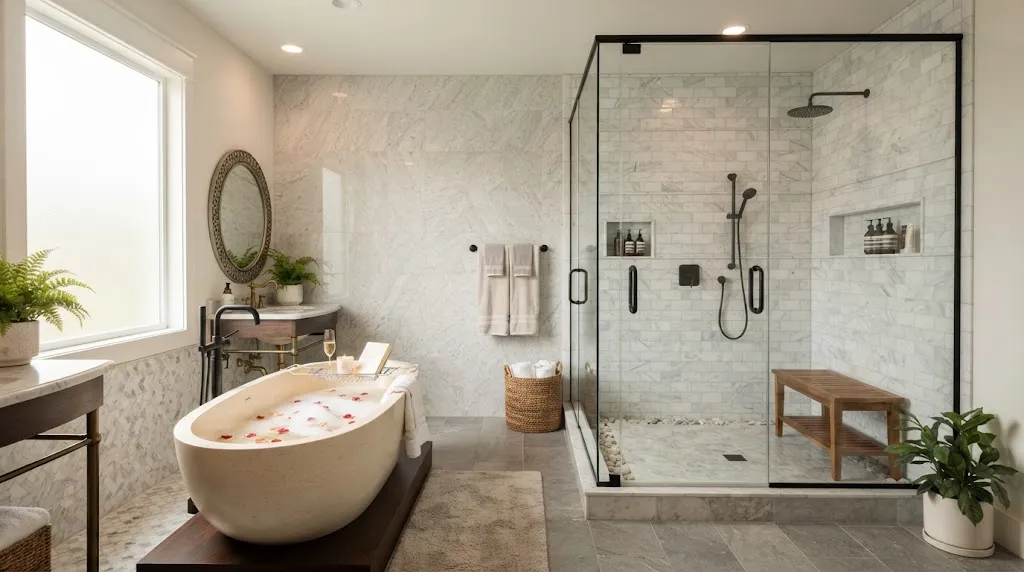
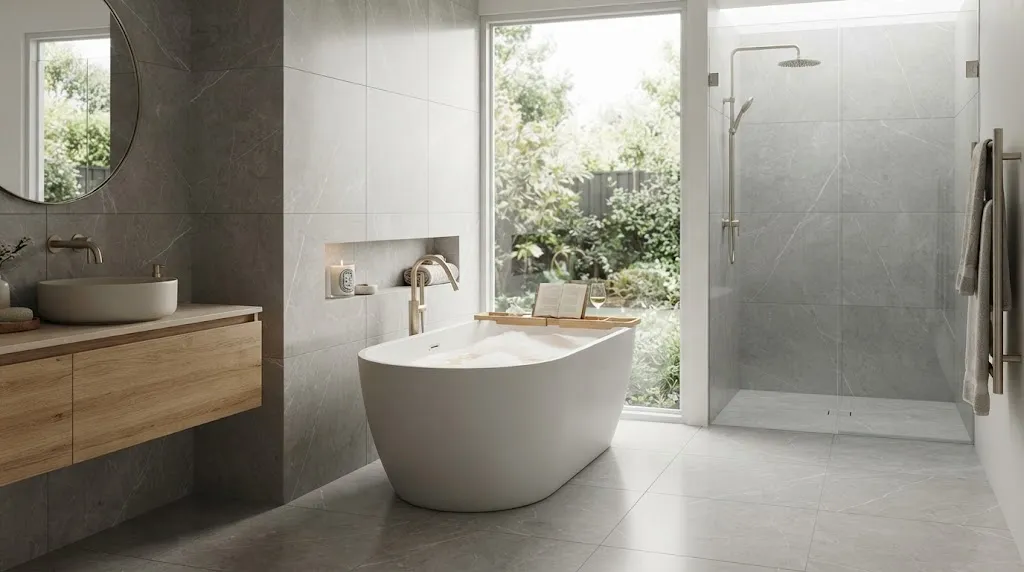
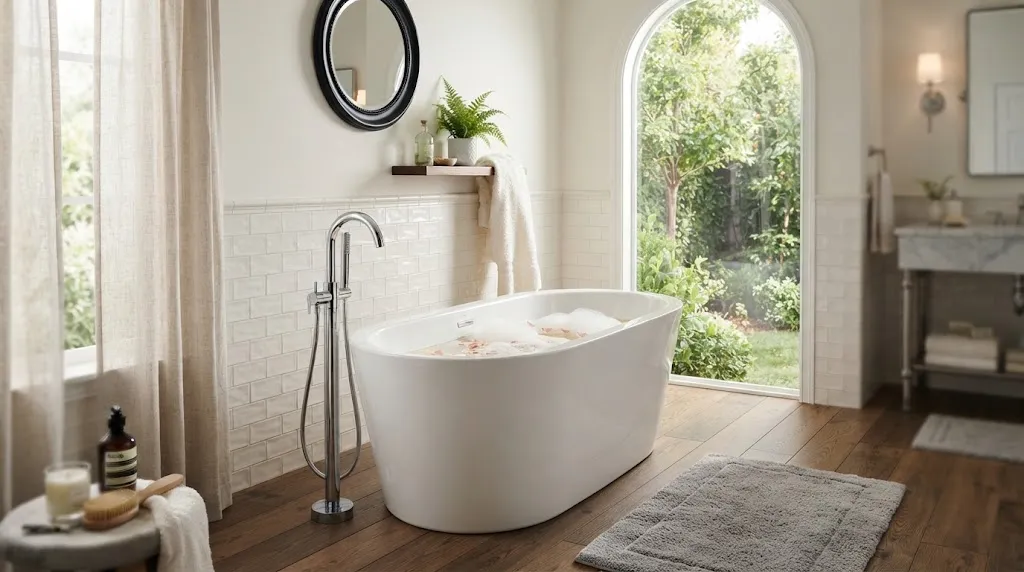
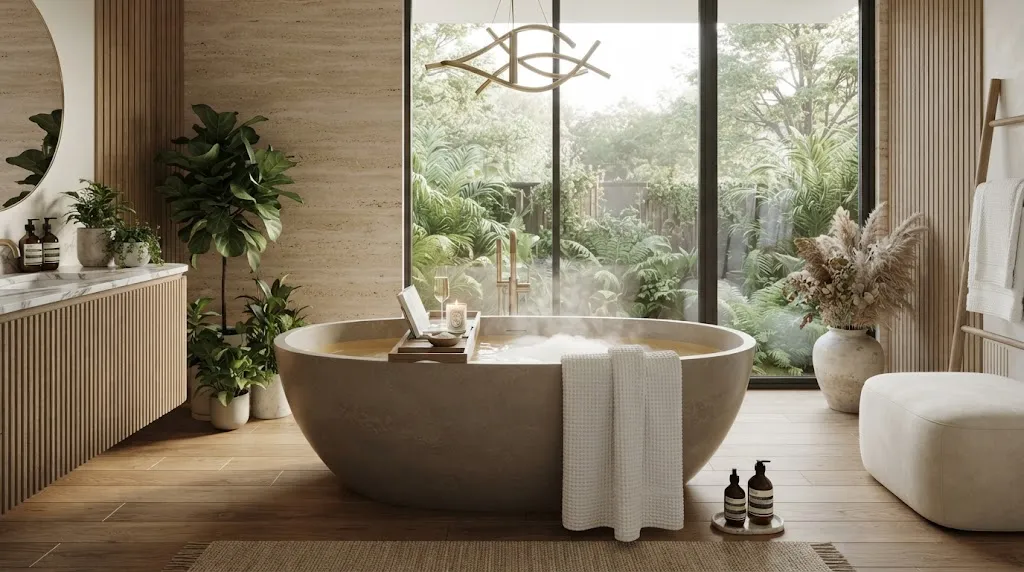
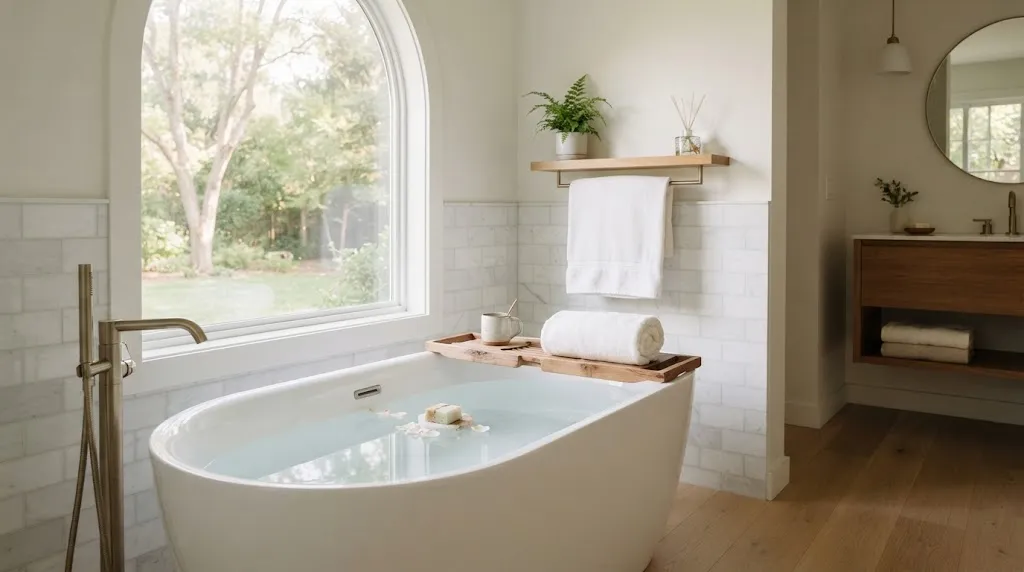
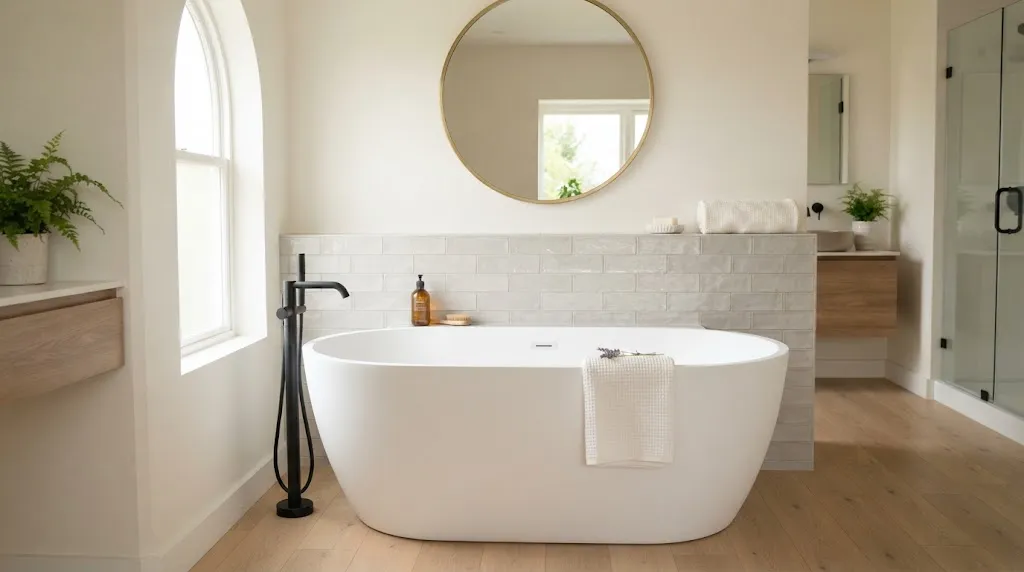
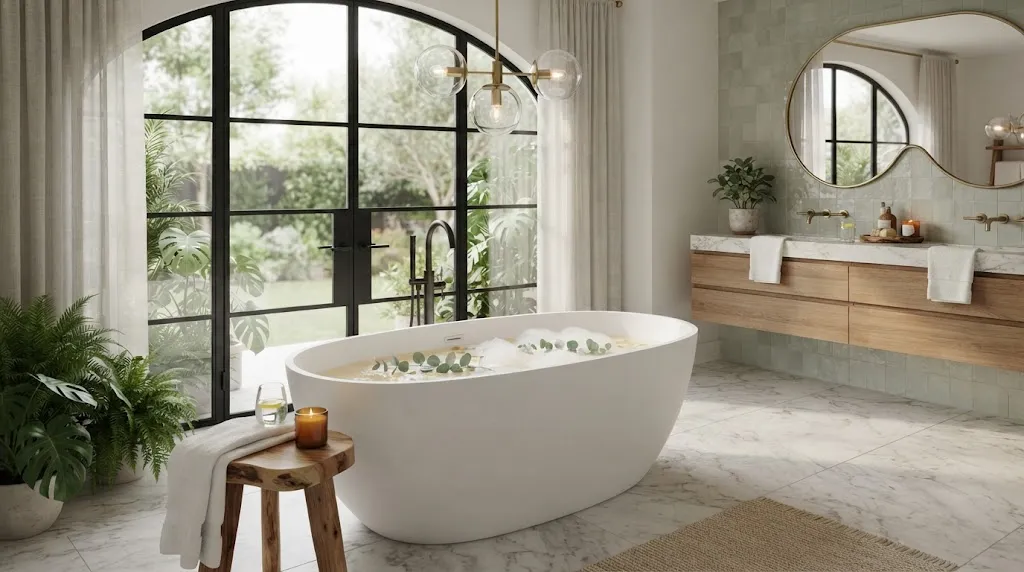
A freestanding bathtub instantly gives a bathroom a more open and architectural appearance. Its sculptural shape naturally draws attention, making it a strong choice for a primary bathroom where you want the tub to be one of the main design features.Place an oval or gently curved tub in front of a large window, between two vanities, or in an open area where it has enough breathing room. Pair it with a floor-mounted tub filler for a sophisticated finish.Before choosing this style, measure carefully. A freestanding tub needs enough surrounding space for comfortable movement, cleaning, and access to plumbing.
2. Create a Cozy Alcove Tub
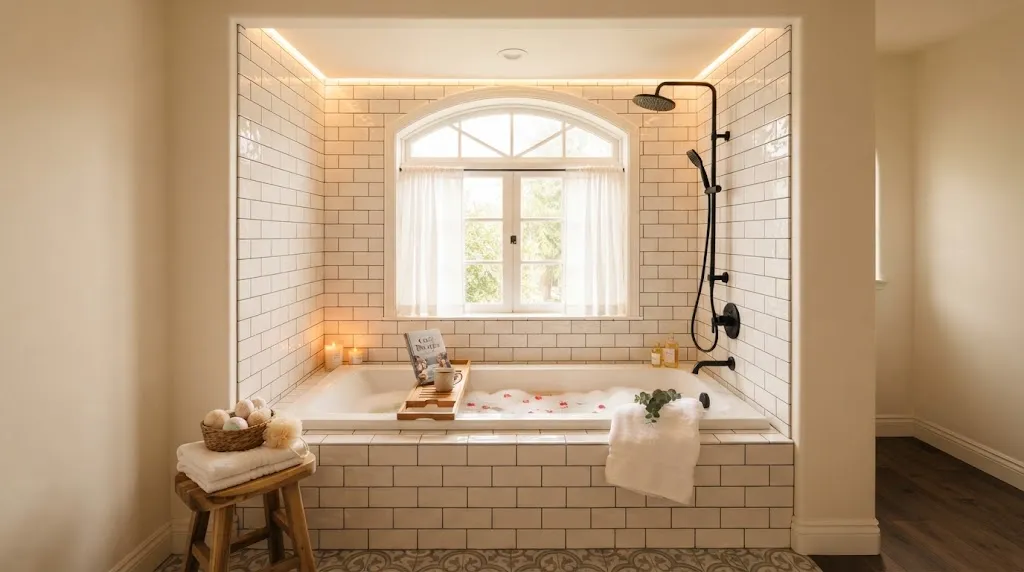
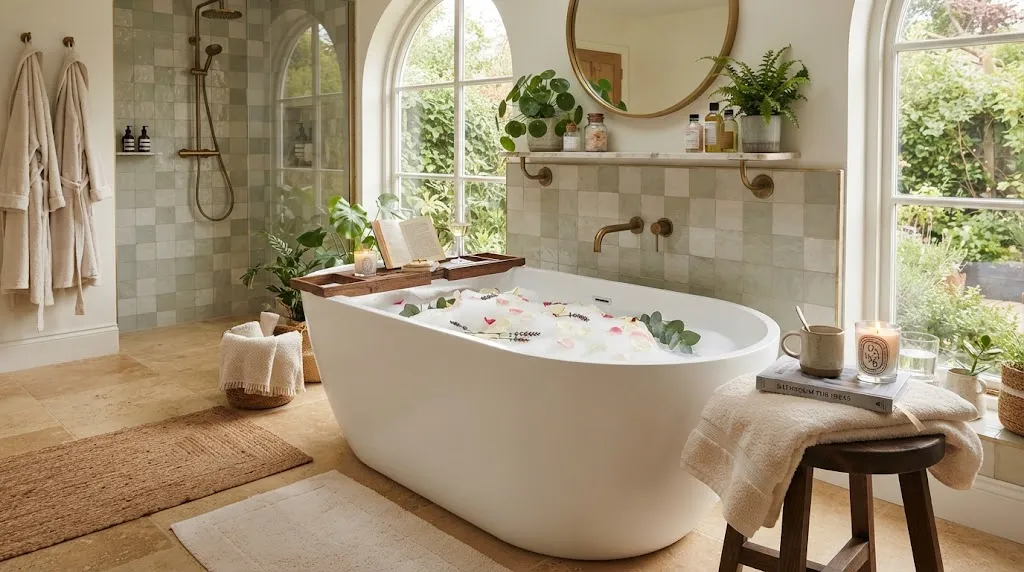
An alcove bathtub is one of the most practical bathroom tub ideas for American homes. Because the tub is enclosed by three walls, it can fit naturally into a dedicated bathing area without requiring as much open floor space as a freestanding model.But practical does not have to mean boring. You can make an alcove tub feel custom by covering the surrounding walls with beautiful tile, stone-look porcelain, or textured finishes.A simple white tub can look especially sophisticated when surrounded by warm beige tile and brushed brass fixtures.
3. Try a Deep Soaking Tub
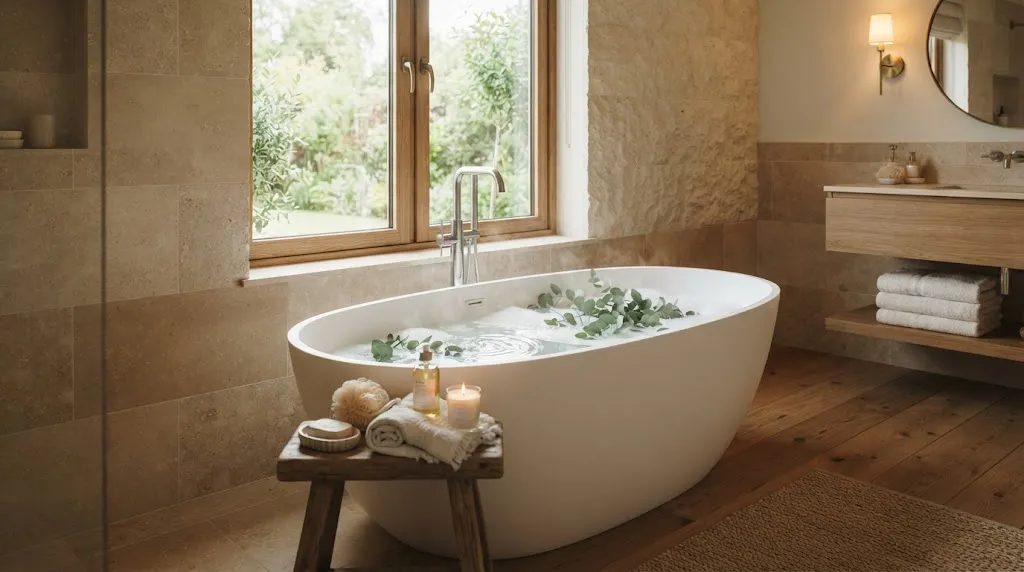
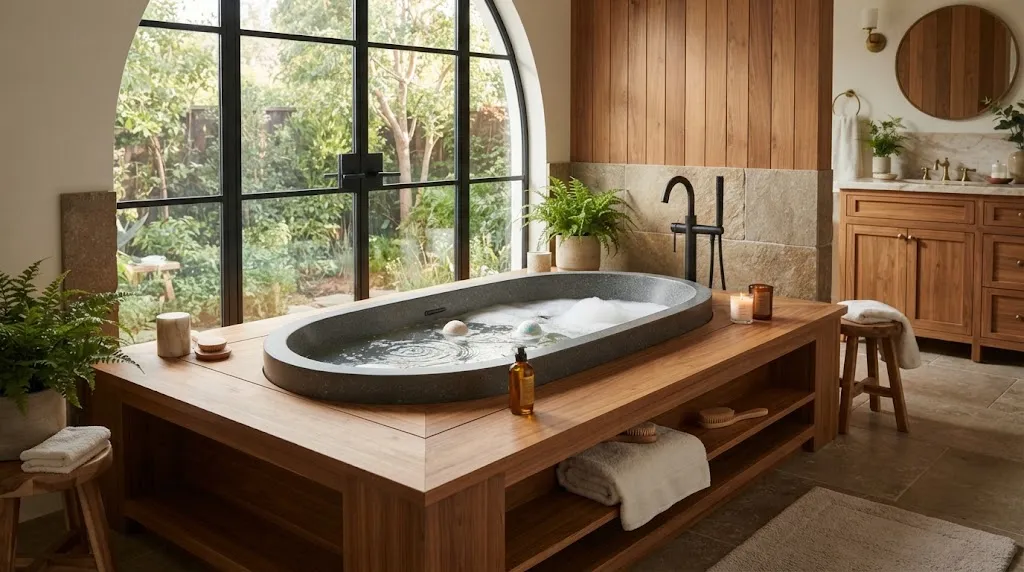
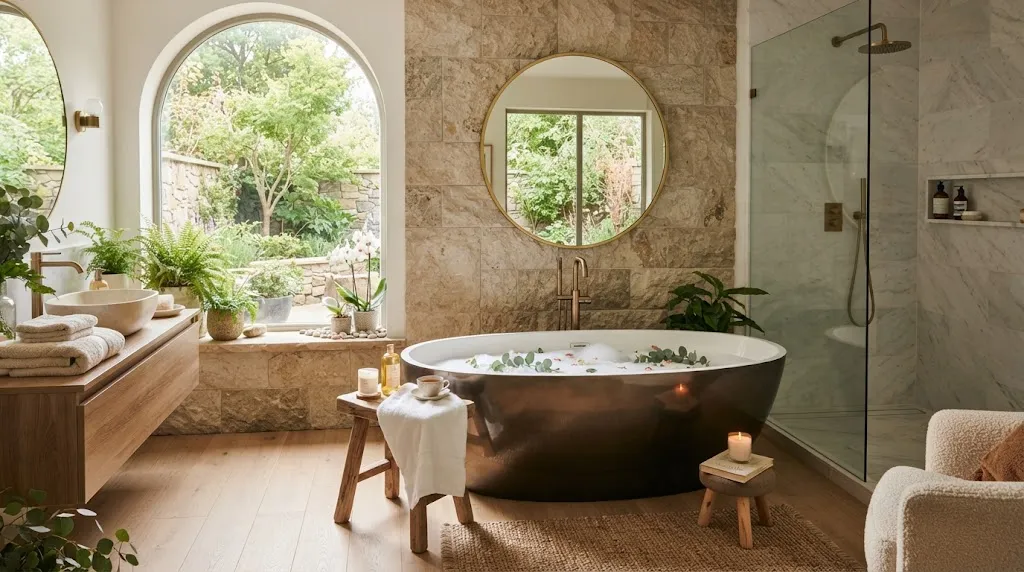
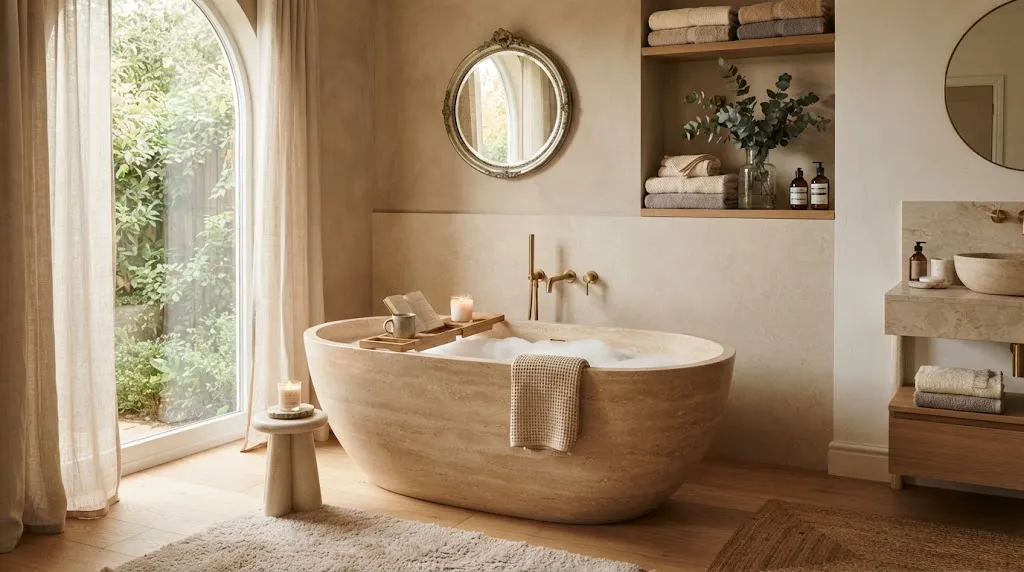
If relaxing in the bath is your favorite part of the evening, consider a deep soaking tub. These tubs are designed to provide greater water depth, allowing you to enjoy a more immersive bathing experience.A soaking tub can work especially well in a spa-inspired bathroom. Keep the surrounding design simple with natural stone, warm wood tones, soft lighting, and a few carefully chosen accessories.The goal is to create a calm environment rather than filling every surface with decoration.
4. Put the Tub Beneath a Window
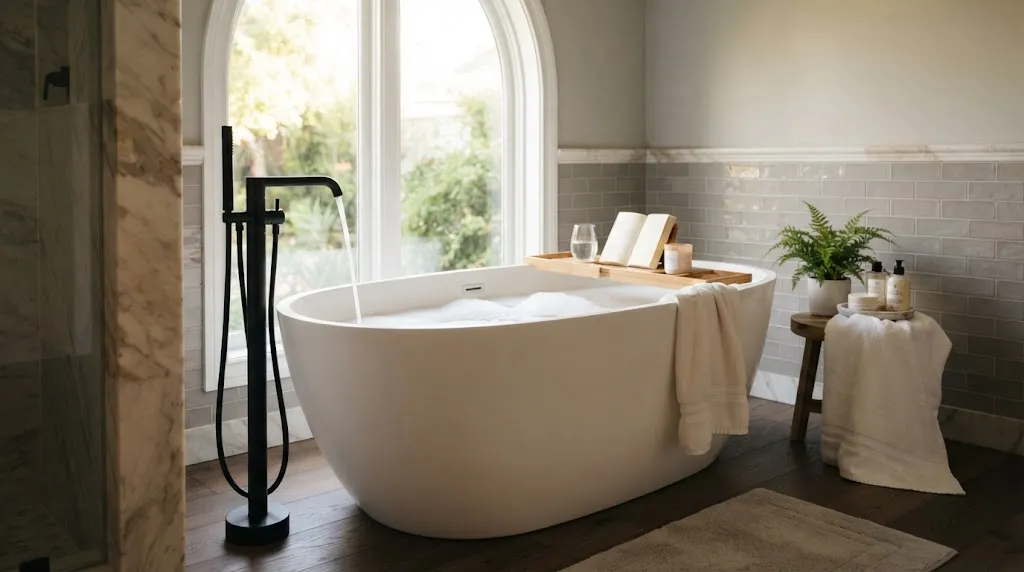
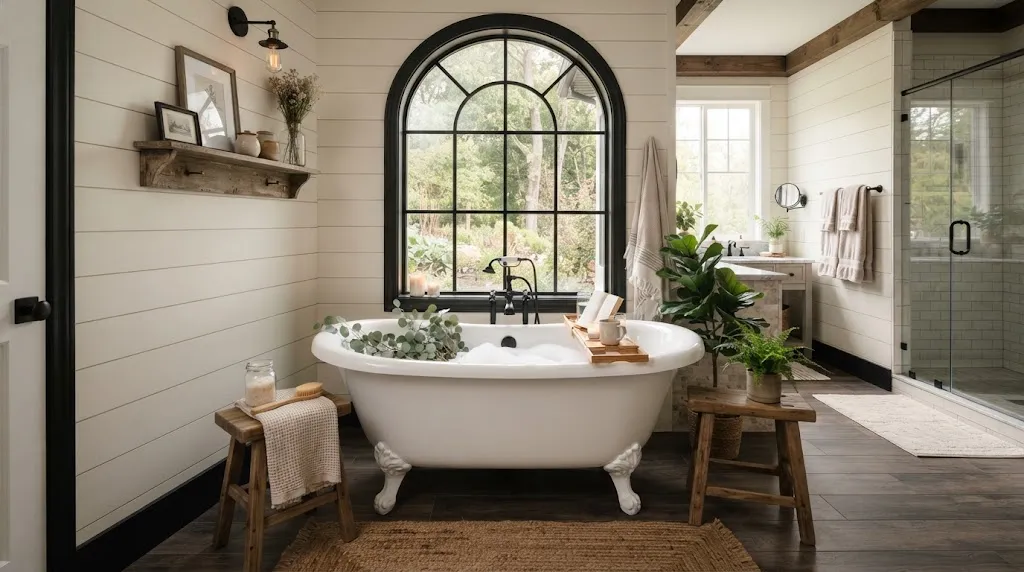
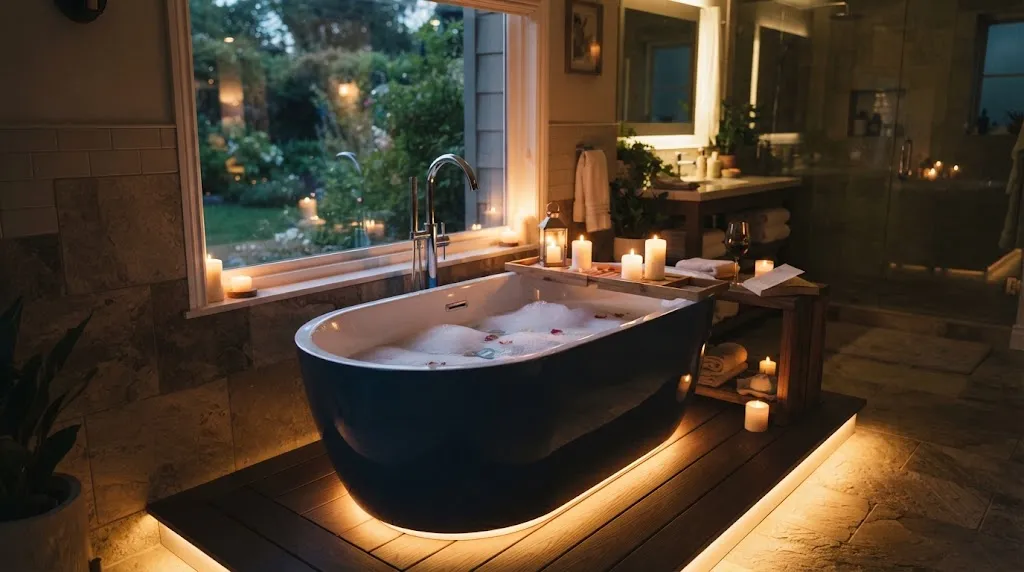
Few bathroom layouts feel as peaceful as a bathtub positioned beneath a beautiful window. Natural daylight can make the bathroom feel larger and more inviting while giving the bathing area a strong visual connection to the outdoors.For privacy, consider frosted glass, textured window treatments, or strategically placed landscaping outside. Avoid placing plumbing fixtures where they unnecessarily interrupt the window or make cleaning difficult.A white tub beneath a large window paired with light stone walls can create an especially timeless look.
5. Add Warm Wood Around the Tub
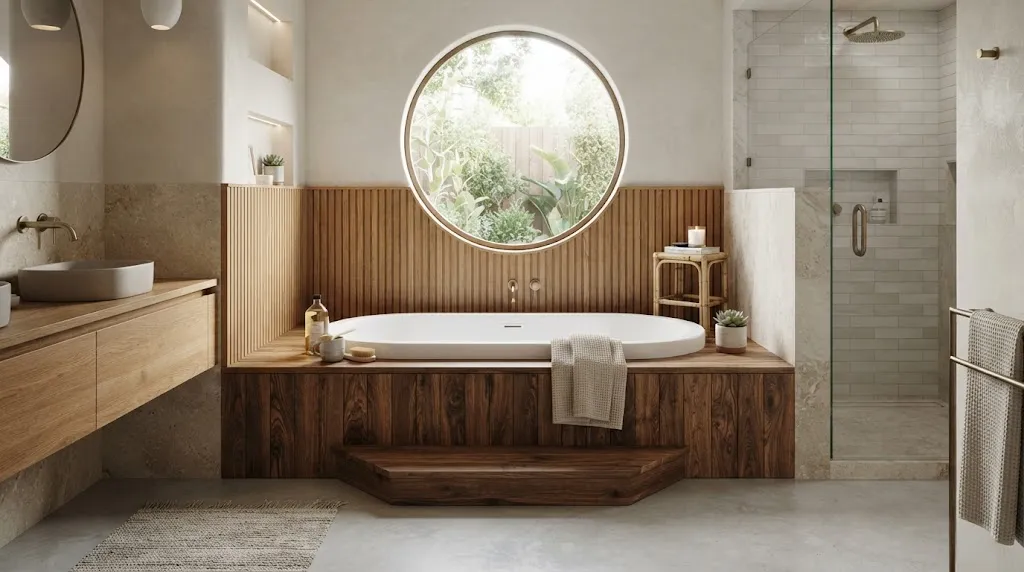
Bathrooms can sometimes feel cold because of their hard surfaces. Warm wood tones can soften the appearance and bring a more comfortable residential feeling to the room.Consider a wood vanity, floating shelves, a small teak stool, or wood-look porcelain tile near the tub. Natural oak and walnut-inspired finishes work beautifully with white bathtubs.For areas exposed to water, use materials specifically designed and installed for bathroom conditions rather than untreated wood.
6. Make a White Tub Feel More Interesting
A classic white bathtub does not have to look basic. In fact, white is one of the easiest colors to build a bathroom design around.Add interest through surrounding materials instead of replacing the tub with something overly complicated. Try warm marble-look tile, patterned flooring, black hardware, brass lighting, or a colorful accent wall.This approach gives you flexibility if you decide to change the bathroom’s accessories or color palette lat
7. Pair the Tub With a Walk-In Shower
If you have enough space, combining a bathtub with a separate walk-in shower can give the bathroom both relaxation and everyday functionality.A freestanding tub can sit beside a glass-enclosed shower, creating two clearly defined bathing areas. In a larger bathroom, matching the tile throughout both spaces can make the design feel cohesive.For a more open appearance, use clear glass and a minimal shower frame. The result can feel spacious without requiring excessive decoration.
8. Create a Small Tub Nook
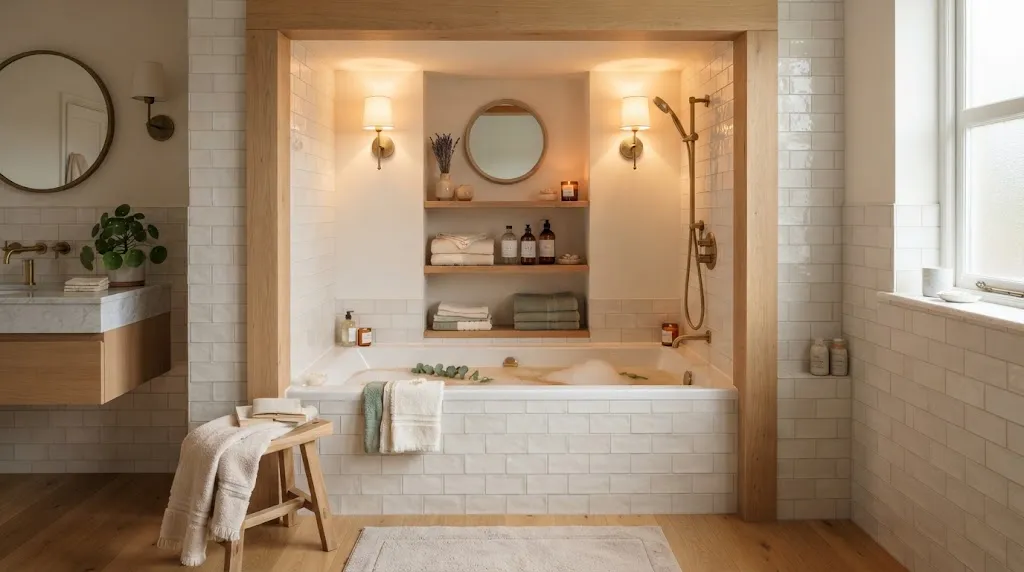
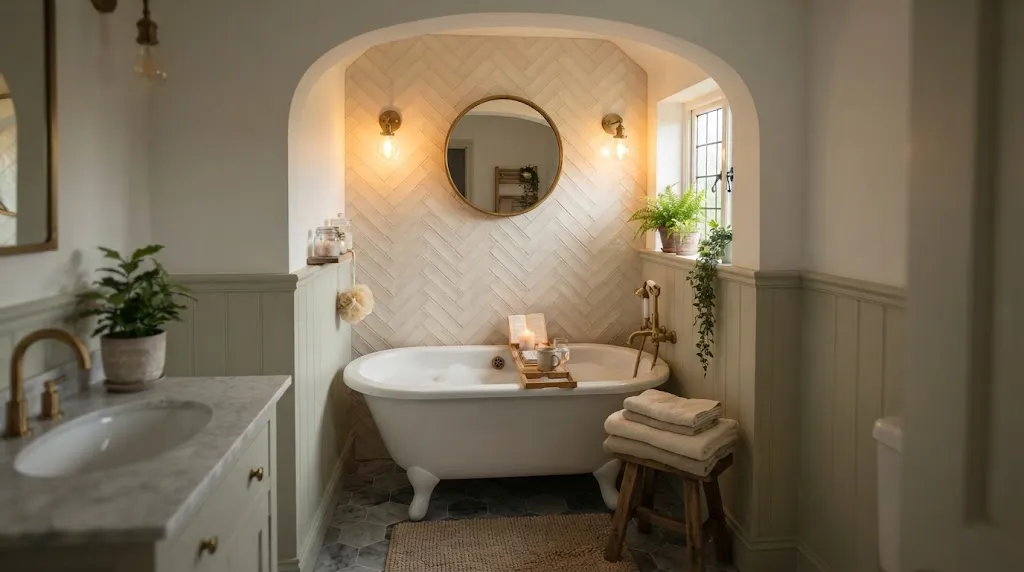
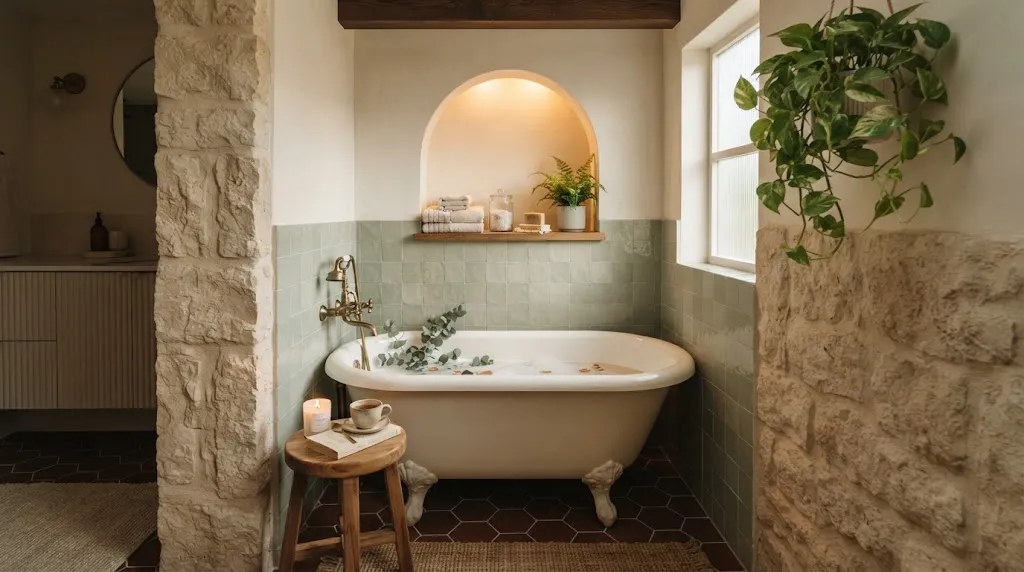
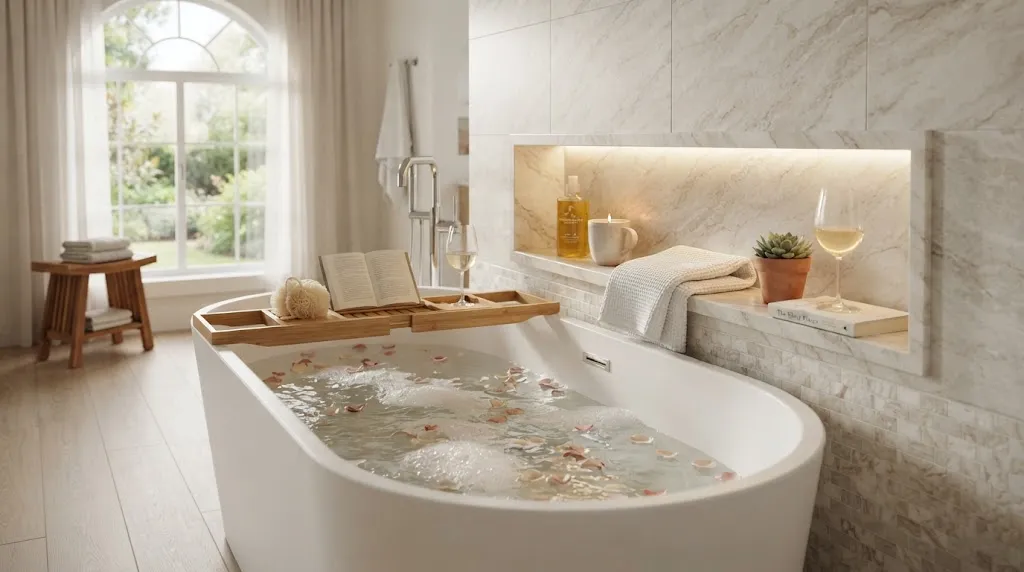
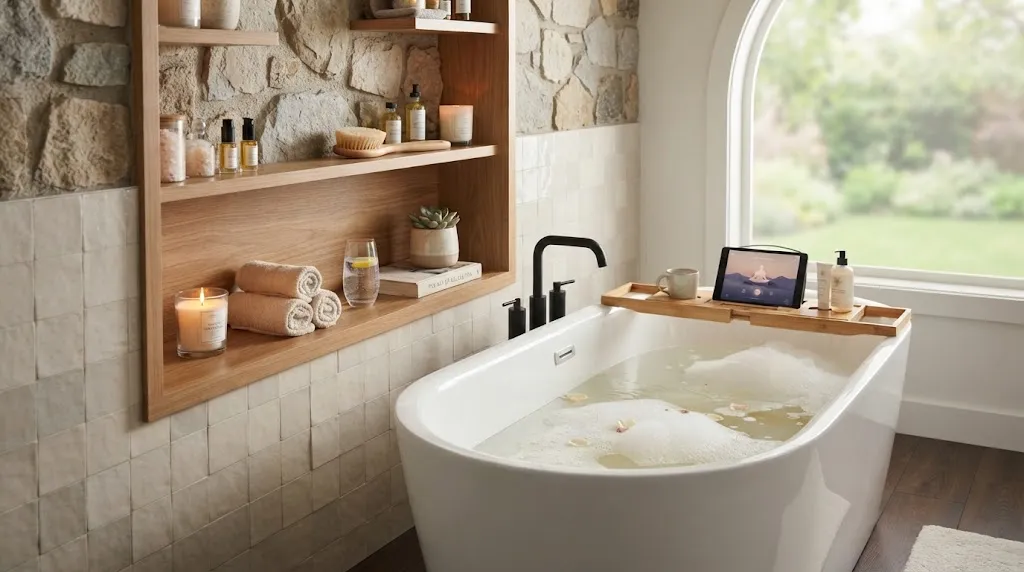
A dedicated tub nook can make even a simple bathtub feel intentional. Instead of leaving the tub floating in an oversized room, frame it with a partial wall, architectural niche, or recessed area.This approach can provide a sense of privacy and make the bathing area feel more intimate. Current bathroom design discussions also highlight bath nooks and recessed bathing areas as a way to combine visual interest with a more enclosed, relaxing atmosphere.Use the surrounding walls for decorative tile, recessed shelves, or a small ledge for bath essentials.
9. Use Large-Format Tile
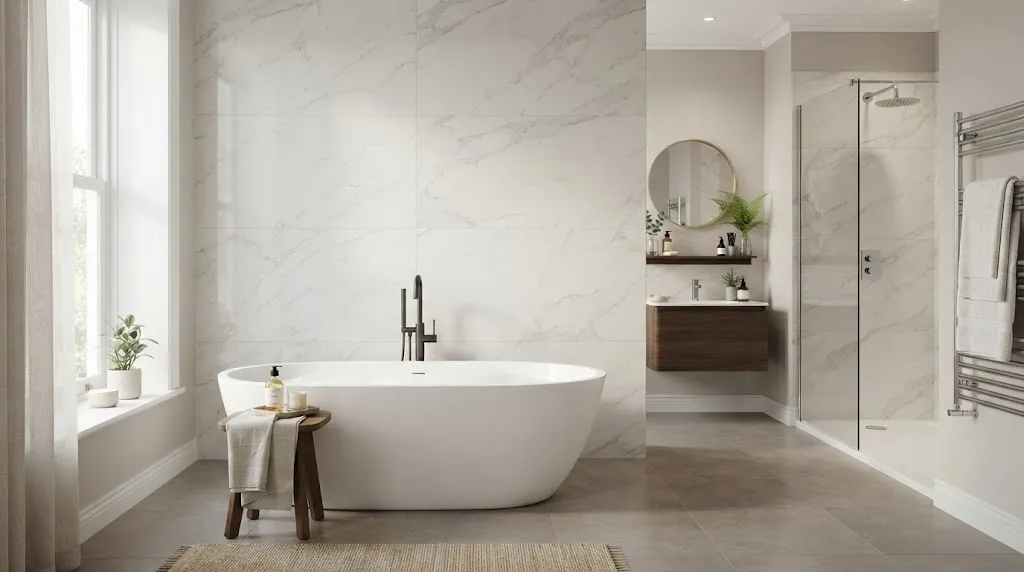
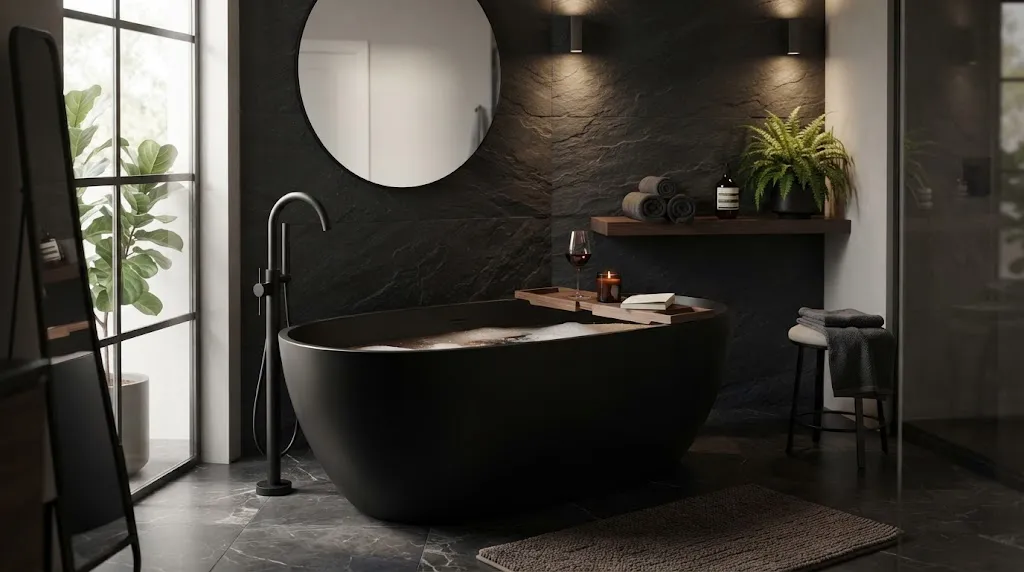
Large-format tile can give the bathroom a clean and contemporary appearance. Because there are fewer grout lines, the walls can look less visually busy.For a sophisticated bathroom, try large-format marble-look porcelain around the tub. Beige, soft gray, warm white, and subtle taupe can create a timeless palette.If you love dramatic bathrooms, darker stone-look tile can also work beautifully, especially when balanced with a lighter bathtub and warm lighting.
10. Add a Freestanding Tub Filler
The faucet can make a surprising difference in how the bathtub looks. A floor-mounted filler beside a freestanding tub creates a polished, architectural appearance.Brushed brass adds warmth, matte black creates contrast, and polished chrome works well in traditional or transitional bathrooms.Choose the finish based on the other fixtures in the room so that the bathtub does not feel visually disconnected from the vanity, shower, and lighting.
11. Create a Modern Farmhouse Tub Area
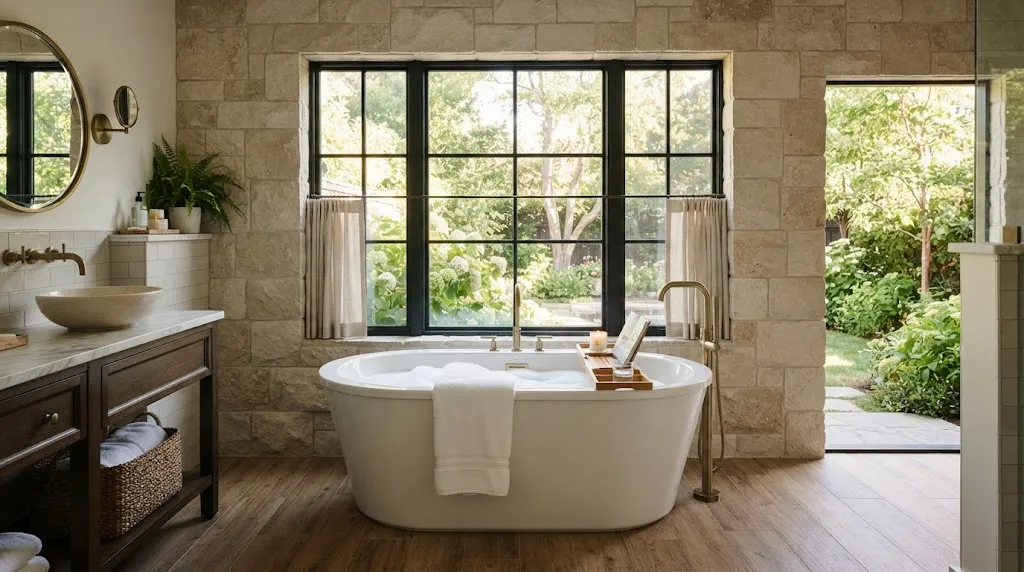
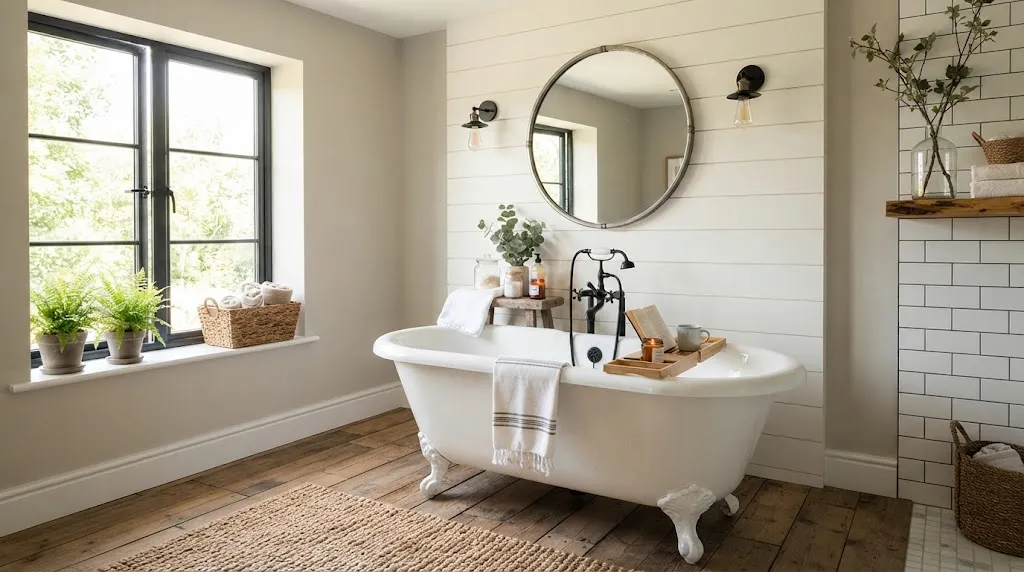
For homeowners who love modern farmhouse style, combine a simple white bathtub with warm natural materials.A wood vanity, black or aged-brass fixtures, white wall tile, woven baskets, and a soft neutral rug can create a comfortable farmhouse-inspired bathroom without making the room feel overly rustic.Keep the decorative elements intentional. A few beautiful pieces generally create a more polished look than filling every corner with farmhouse accessories.
12. Design a Spa-Inspired Bathroom
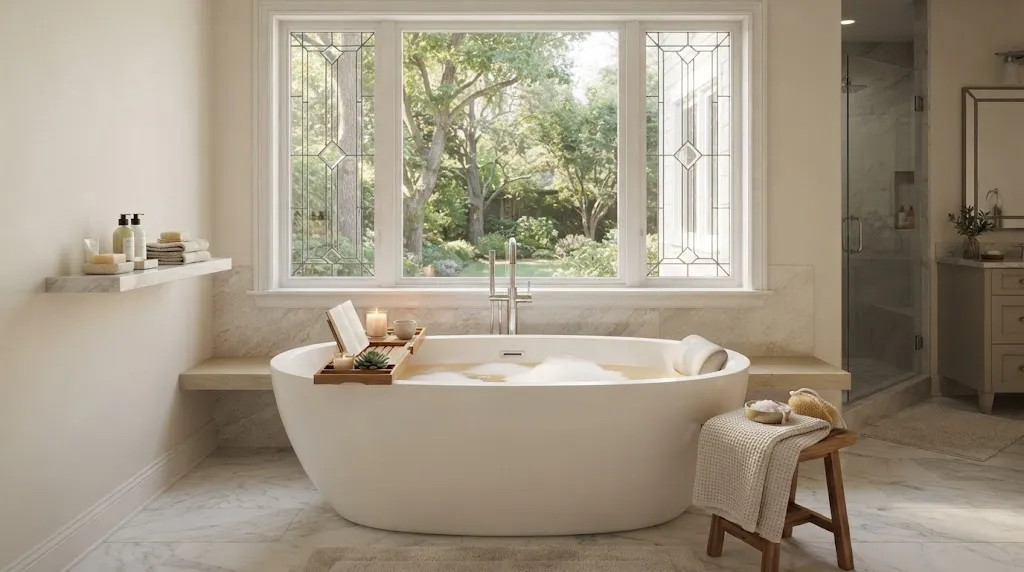
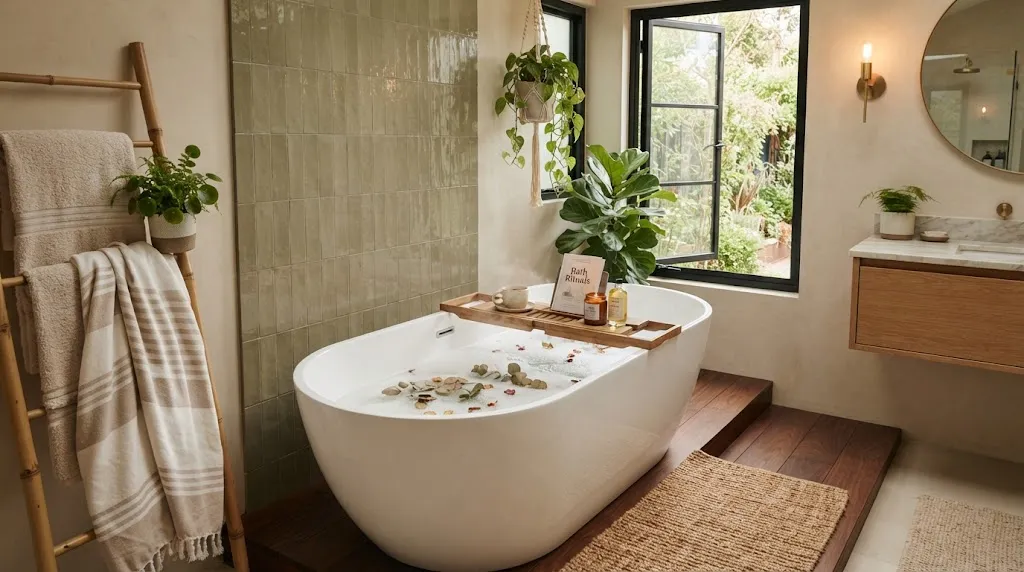
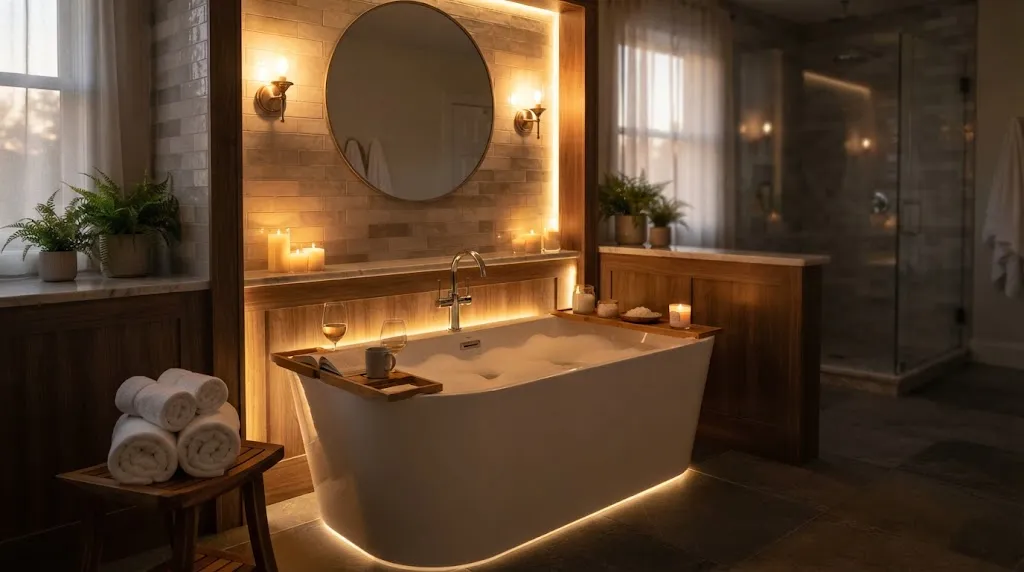
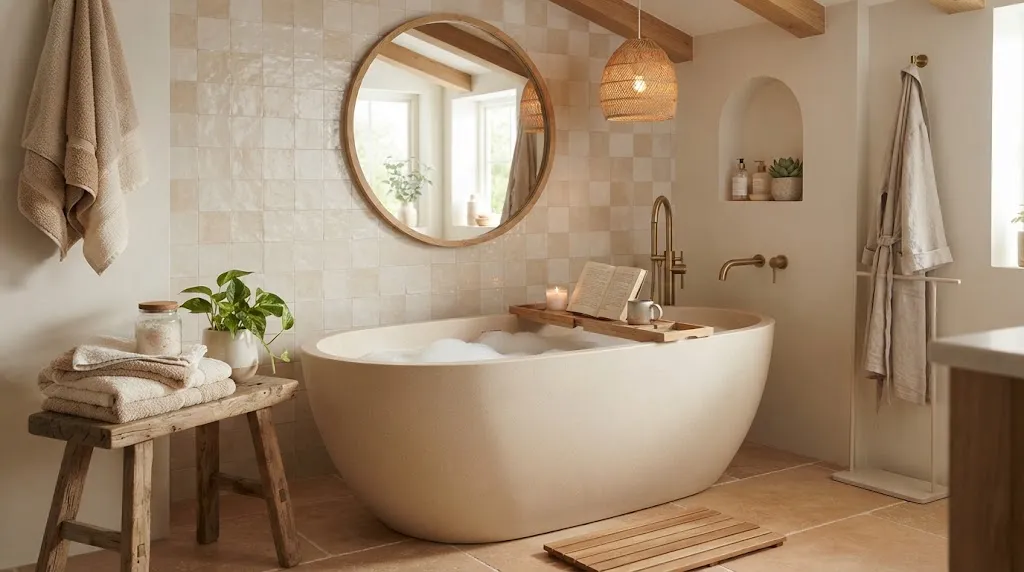
Turn your bathtub area into a personal retreat by focusing on atmosphere.Use soft neutral colors, natural textures, warm lighting, fluffy towels, and a small stool or bath tray. You can also add greenery that is suitable for the bathroom environment.Instead of using many decorative objects, concentrate on creating a peaceful visual experience. A clean countertop and uncluttered tub surround can make the bathroom feel considerably more relaxing.
13. Add a Built-In Tub Shelf
A built-in shelf around an alcove bathtub can provide both style and useful storage. It gives you a convenient place for towels, bath products, candles, or decorative accessories.If you are remodeling, plan the shelf at the same time as the tub and surrounding waterproofing. A properly designed and waterproofed bathing area is important because moisture can create long-term problems behind tile and finished surfaces.Built-in storage also helps keep the countertop and tub edge from becoming cluttered.
14. Use Soft Lighting Around the Tub
Lighting can completely change the mood of a bathroom. Instead of relying only on a bright ceiling fixture, consider layering several types of lighting.Wall sconces can provide attractive ambient light, while recessed lighting can brighten the overall room. A dimmable fixture can make the bathing area feel softer in the evening.If you are considering a chandelier or pendant near a bathtub, have the installation reviewed by a qualified professional and follow applicable local electrical codes. Bathroom electrical requirements can be particularly important around water.
15. Try a Black Bathtub for Drama
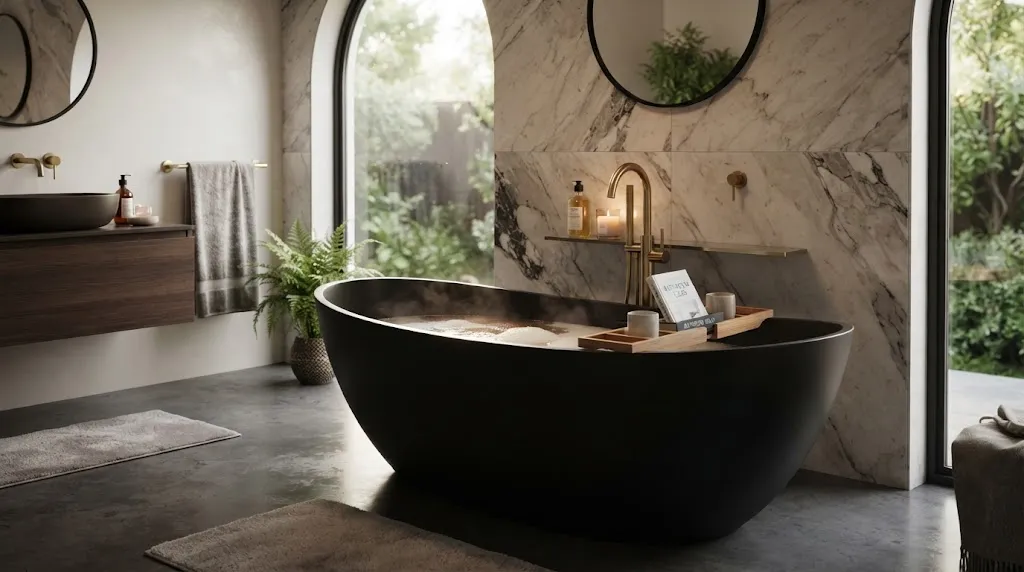
A black or very dark bathtub can create a dramatic contemporary statement. It works particularly well in bathrooms with light walls, pale stone, or warm wood.if the entire bathroom is already dark, however, a dark tub may visually disappear. Balance it with contrasting surfaces and carefully planned lighting.For a softer alternative, look for deep charcoal or muted gray rather than an intense black.
16. Choose a Warm Neutral Color Palette
Warm neutrals continue to work beautifully in bathroom interiors because they create a comfortable and timeless atmosphere.Think creamy white, beige, sand, taupe, light brown, and warm gray. These shades pair naturally with wood, stone, brass, and greenery.A neutral bathroom can also be easily updated with towels and accessories when you want a seasonal change.
17. Keep the Tub Area Clutter-Free
One of the easiest ways to make a bathtub look more luxurious is simply to keep the surrounding area organized.Instead of leaving bottles, towels, and accessories everywhere, use recessed niches, baskets, cabinets, or a small stool to organize essentials.Choose a few attractive items—a folded towel, a simple tray, a small plant, or a candle—and leave plenty of visual space around them. The result feels intentional rather than overdecorated.
How to Choose the Right Bathtub for Your Bathroom
Before purchasing a bathtub, start with measurements rather than appearance. Measure the bathroom, door openings, existing plumbing locations, available floor space, and the areas needed for comfortable movement.Then consider how the tub will actually be used. If quick everyday baths are the priority, a standard alcove tub may make sense. If long, relaxing baths are important, a deeper soaking tub may be more appealing. If you want the bathtub to serve as the room’s centerpiece, a freestanding design can create that effect.It is also worth considering maintenance. A beautiful design that is difficult to clean may become frustrating over time. Think about the amount of exposed surface, access around the tub, grout lines, faucet placement, and storage before making a final decision.For major bathroom renovations, waterproofing, plumbing, ventilation, and electrical work should be planned alongside the visible finishes. Good ventilation is particularly important in a moisture-heavy room because it helps manage humidity and reduce the potential for mold and mildew.
Final Thoughts
The right bathtub can make a bathroom feel more comfortable, personal, and visually complete. Whether you prefer a modern freestanding tub, a practical alcove design, a deep soaking tub, or a cozy tub nook, there are plenty of ways to create a beautiful bathing space without sacrificing everyday function.The most successful bathroom tub ideas begin with the room itself. Consider your available space, lifestyle, storage needs, lighting, materials, and long-term comfort before choosing the tub. Then build the surrounding design around that decision.A thoughtfully planned bathtub area does not need excessive decoration to feel special. With the right proportions, calming colors, beautiful materials, good lighting, and a clutter-free layout, even a simple tub can become the relaxing centerpiece of your bathroom.